

Alianz and AI
In a world full of images, true luxury is not only about looking good, it is about working beautifully for years, with durability, calm, and precision. At Alianz Architecture, we use AI in our architectural design process as a tool for creative exploration and communication, but architectural judgment always leads. AI accelerates, organizes, and reveals options, but it does not replace what matters most, understanding the site, the climate, the client’s lifestyle, and real construction.
How We Use AI to Explore Design Without Losing Architectural Judgment
The right question is not whether to use AI
The right question is at what stage it adds value without contaminating the process. AI works best when we use it as:
- An alternative engine, to explore options quickly
- A communication tool, to make an intention visible
- An aesthetic filter, to compare materiality, light, and atmosphere
- A bridge with the client, to understand preferences clearly
And it works poorly when it is used as a substitute for drawings, technical coordination, regulations, structure, or budget.
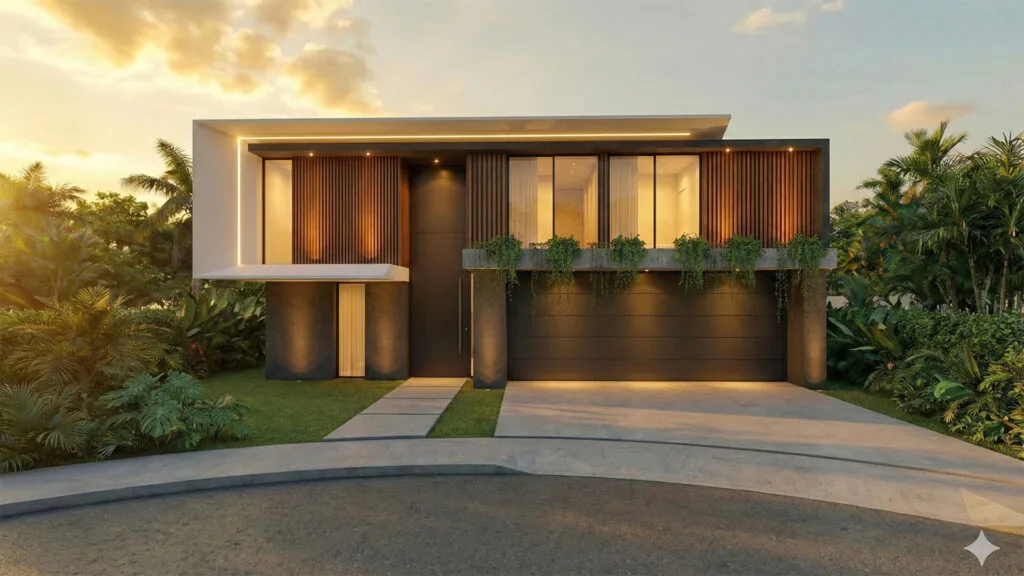
Our Method, AI with Architecture, Not AI Over Architecture
First, the project vision, without AI
Before generating images, we define what truly governs the design:
- Site, topography, winds, rainfall, sun exposure
- Privacy, views, access, noise, neighbors
- Program, how people live, routines, guests, work, rest
- Architectural language, warmth, restraint, honest materials
- Budget and desired level of maintenance
If the project vision is weak, AI only makes a problem look prettier.
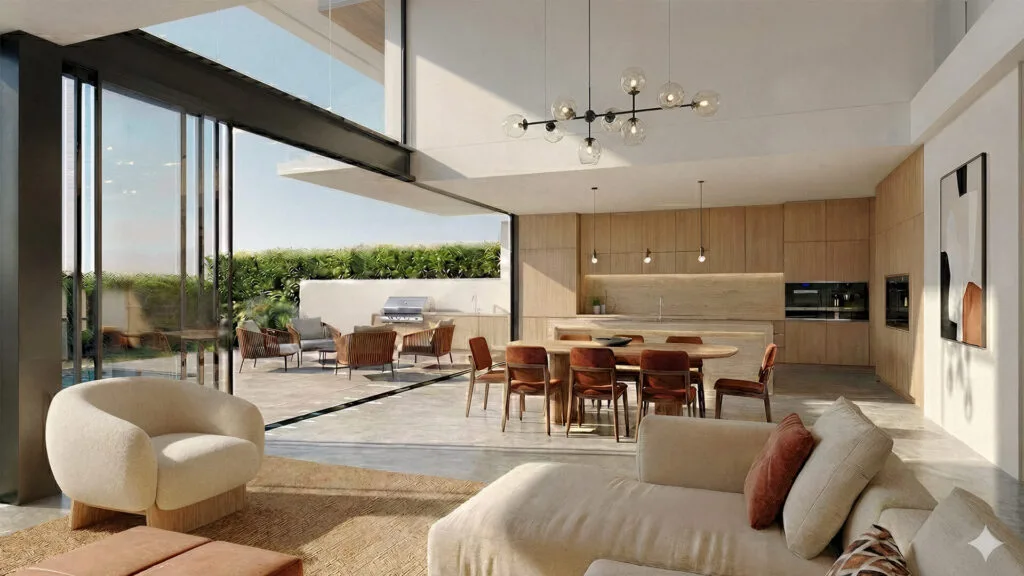
AI for atmosphere, light, and narrative
Here AI becomes powerful because it lets us explore sensations and decisions of character:
- How a space feels in the morning, afternoon, and at night
- Which texture dominates, stone, wood, concrete, microcement, porcelain
- How open or protected the interior feels
- Whether the house breathes, or turns into a closed box
Instead of generating “a beautiful house,” we generate intention variants, more contemplative, more social, more intimate, more minimalist, warmer, more sculptural, more urban, more jungle, drier tropical, more coastal.
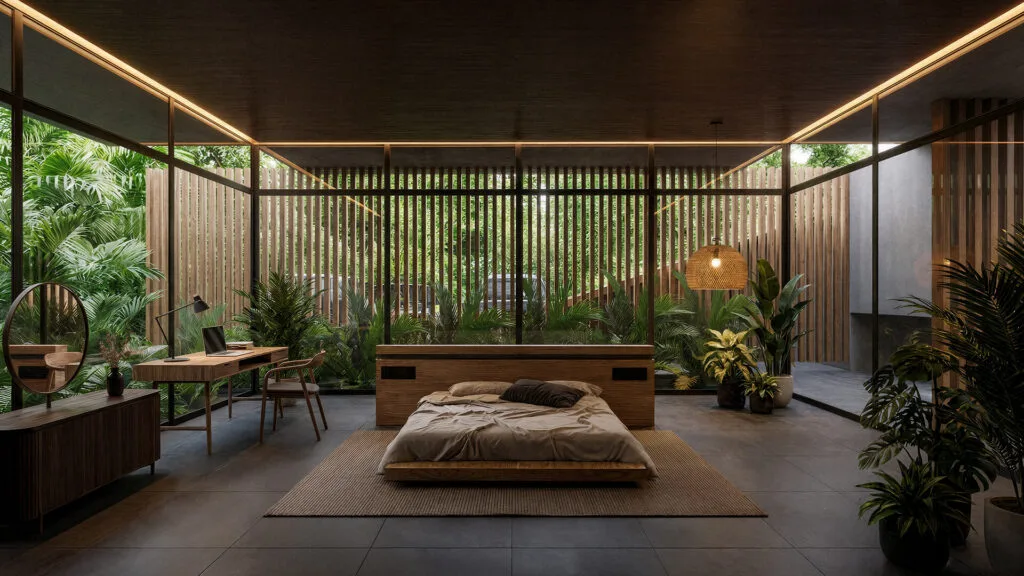
AI as a fast board of alternatives, without committing to any one
AI helps us compare at speed. Often, the best decision does not come from a perfect image, but from seeing many options and discovering a clear pattern:
- The right overhang
- The screen or louver system that truly works
- The real proportion of a terrace
- The scale of a double height void
- The relationship between interior and exterior
This is how we move from abstract debates to clear, concrete decisions.

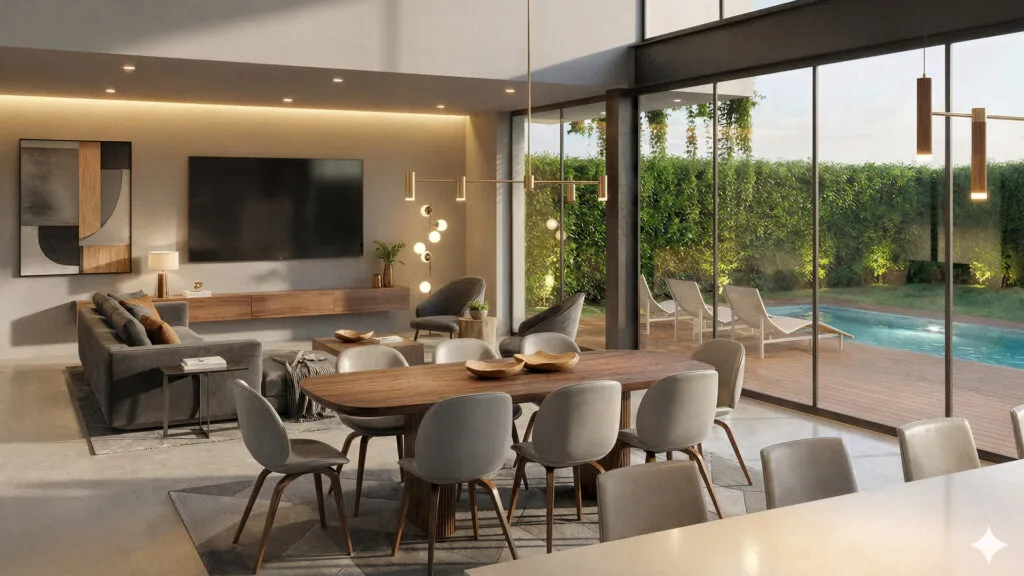
Architectural judgment filters with real rules
Every visual proposal passes through a simple filter, without romanticism:
- Does it respect orientation and climate?
- Is it buildable with available techniques and materials?
- What maintenance will it demand in the tropics?
- What is the hidden cost implied by that image?
- How does it resolve structure, drainage, and waterproofing?
- Is it coherent with the client’s lifestyle and the project’s identity?
AI proposes, architecture validates.
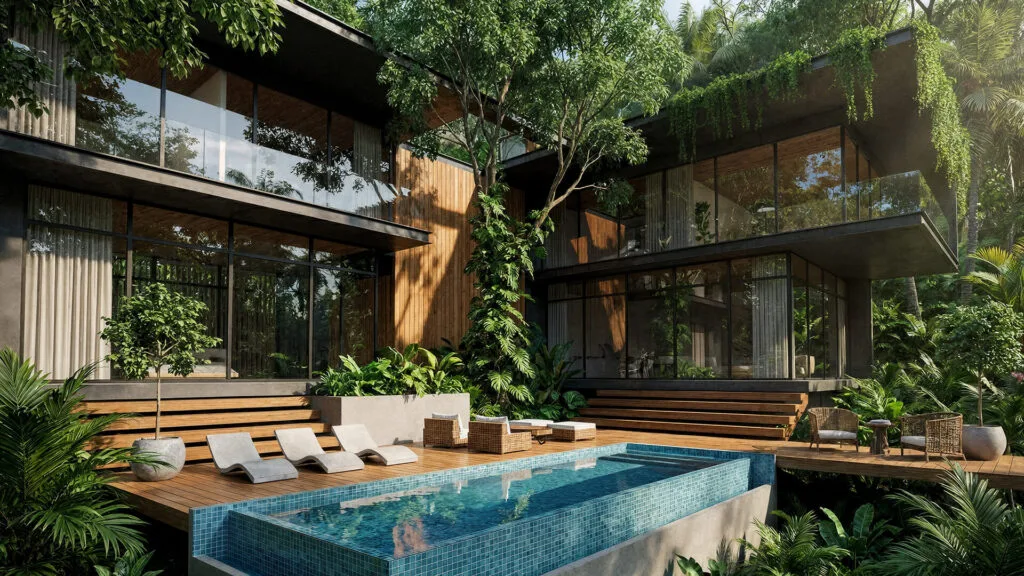
From image to reality, drawing, plans, and coordination
When the intention is defined, the project becomes serious. We move from exploration to precision:
- Plan schemes, massing, and proportion
- Shade details, junctions, joints, and textures
- Selection of real, available materials
- Technical coordination, electrical, mechanical, plumbing
- Budget, schedule, and change control
AI does not replace this. What it does is help us reach sooner a concept worth turning into buildable architecture.
Real benefits for our clients
Used with method, AI offers concrete advantages:
- More options in less time, without lowering the standard
- Better communication, the client understands the essentials earlier
- Earlier decisions, fewer expensive changes during construction
- More coherent materiality, less improvisation
- Greater predictability, fewer surprises in budget and execution
Common risks, and how we avoid them
AI has traps, and we approach them honestly:
- Promising something that cannot be built, we prevent this by validating technically from the start
- Falling in love with an aesthetic that ignores the climate, we prevent this by designing from the site and shade first
- Copying trends without identity, we prevent this through our own narrative and authentic materiality
- Chasing fashion, we prevent this by pursuing timeless elegance
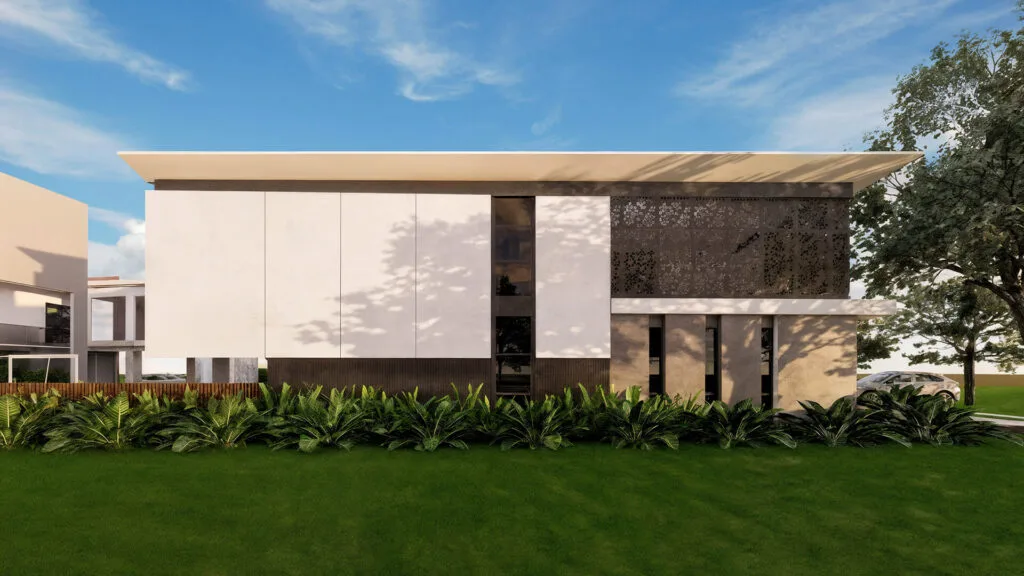
Conclusion
At Alianz Arquitectura, artificial intelligence does not dictate the project. We use it to explore, refine, and communicate, while architectural judgment guides every decision. Because the final goal is not an impressive render, it is a home that feels right, that breathes with the tropics, that lasts, that ages with dignity, and that protects the life that happens inside.