The
wall as a generator of realities, the entry as a ritual, the view as a
destination
Breeze House, in Manuel Antonio, is born from a simple and profound intention, to design a home that breathes with the breeze, that protects itself from the tropics, and that transforms everyday life into something more conscious, more serene, more precise. At Alianz Arquitectura, this kind of project does not begin with a “style”, it begins with a question, what does it mean to inhabit this place, with this light, this humidity, this horizon.
1) The sketch as a compass, when architecture is still intuition
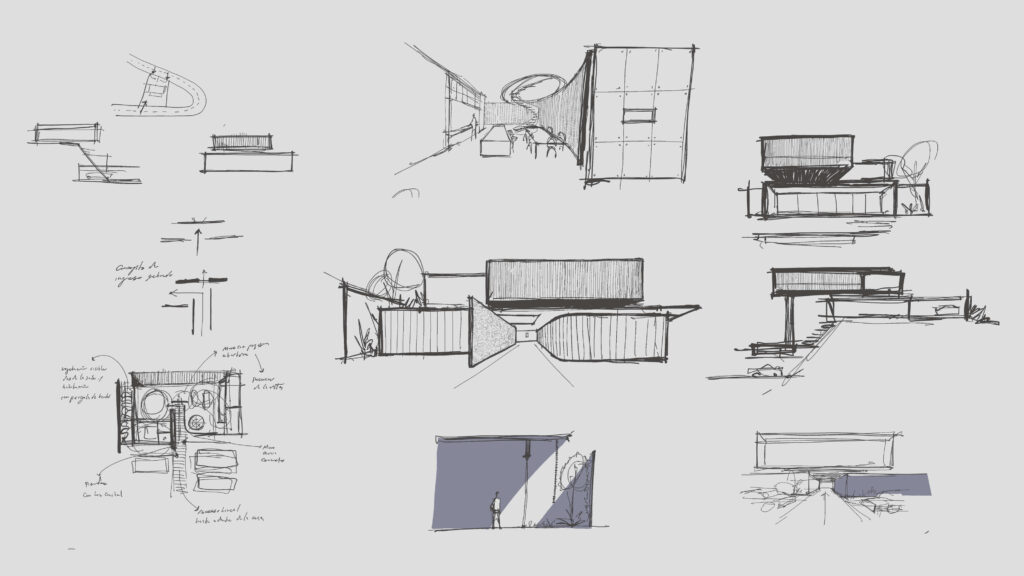
Every project has a stage where the result does not yet exist, only the search. And in that search, the sketch is not decoration, it is fast thinking, it is testing, it is error, it is direction.
In Breeze House, the first drawings work as an exploration of proportions, sections, shadows, and sequences. The sketch does something essential, it allows the project’s character to appear before the final form is decided. Before speaking of façade, depth emerges, before speaking of luxury, silence appears.
2) The main concept, the wall not as a boundary, but as an instrument
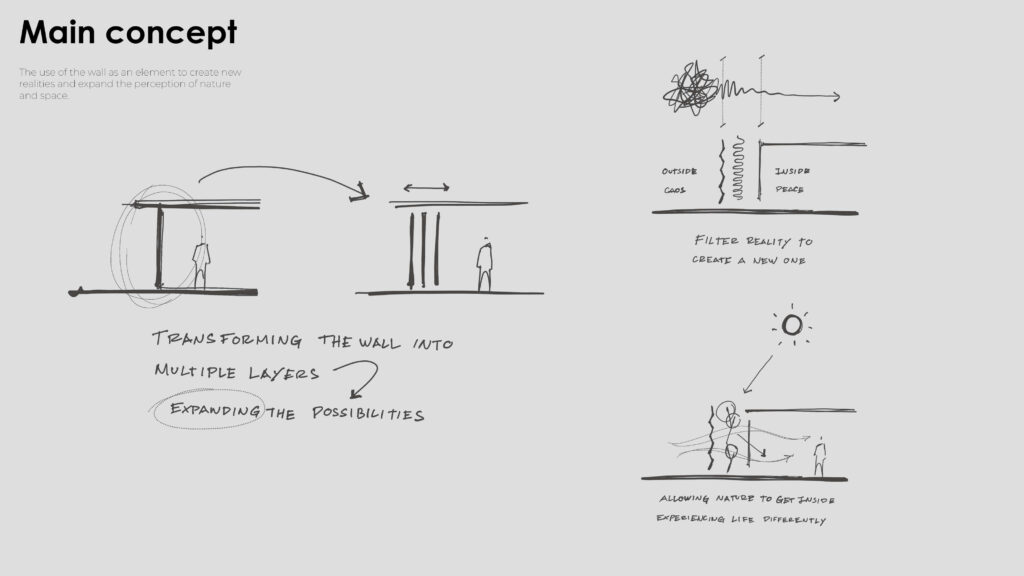
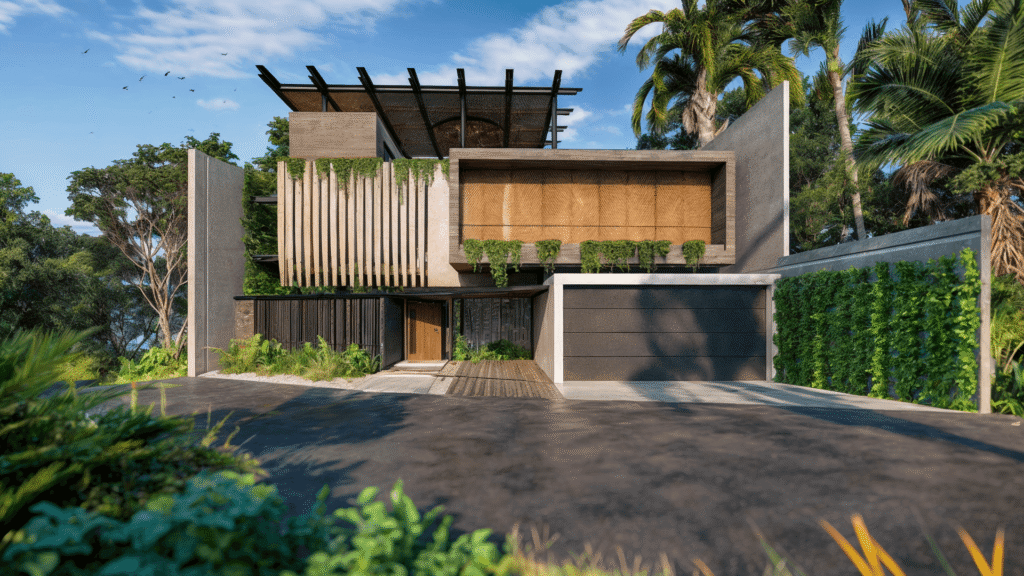
In tropical architecture, a wall should not be a rigid surface that separates, it should be an intelligent system that filters, protects, frames, breathes, and builds atmosphere. In Breeze House, the wall becomes the generator of “new realities”, a device that expands the perception of nature and space.
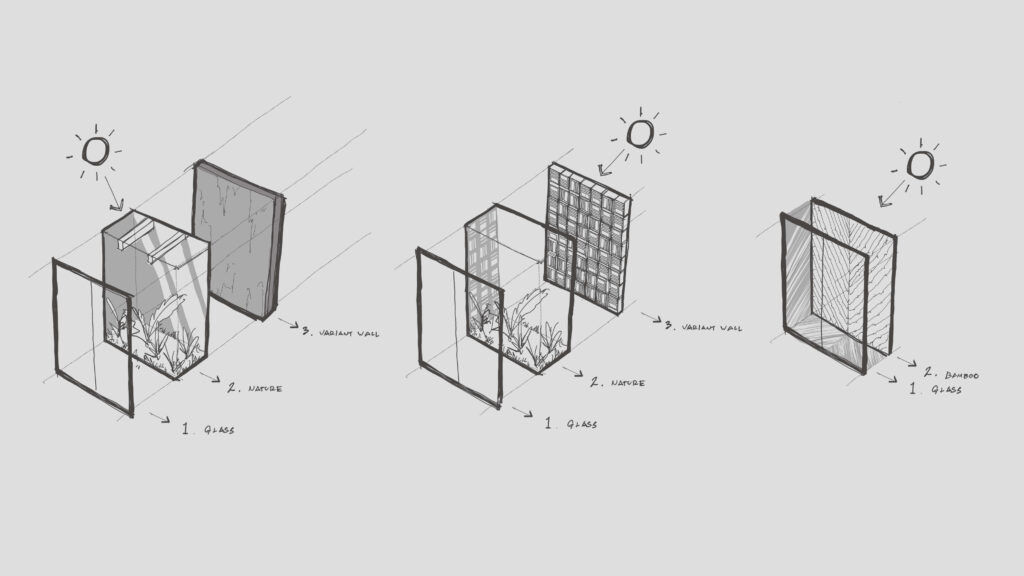
Here a central idea emerges, the home is not designed only through voids, it is designed through layers. A layer is not a trend, it is a response, to light, to heat, to privacy, to the gaze. When the wall is developed in layers, it stops being a line and becomes inhabitable thickness.
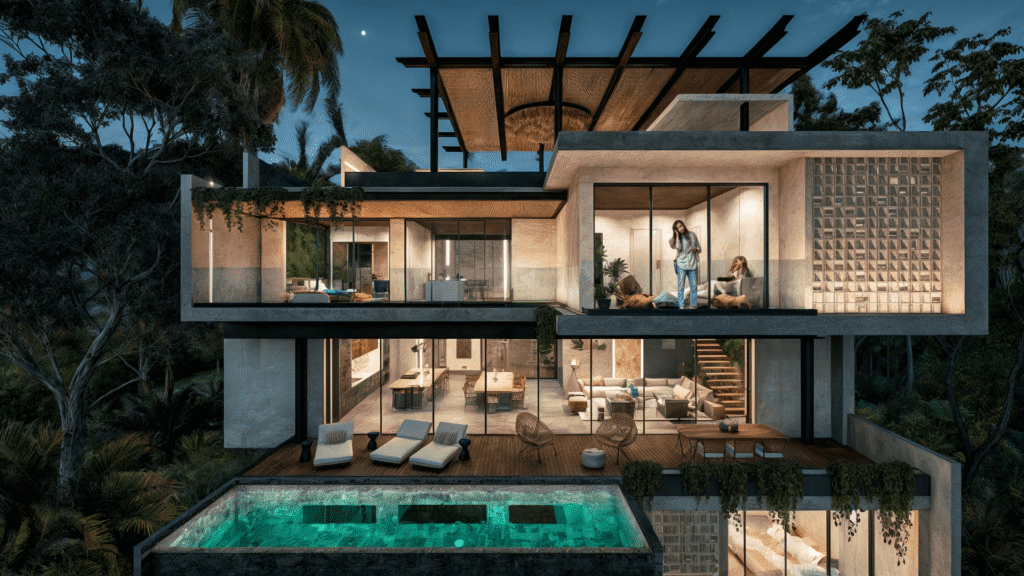
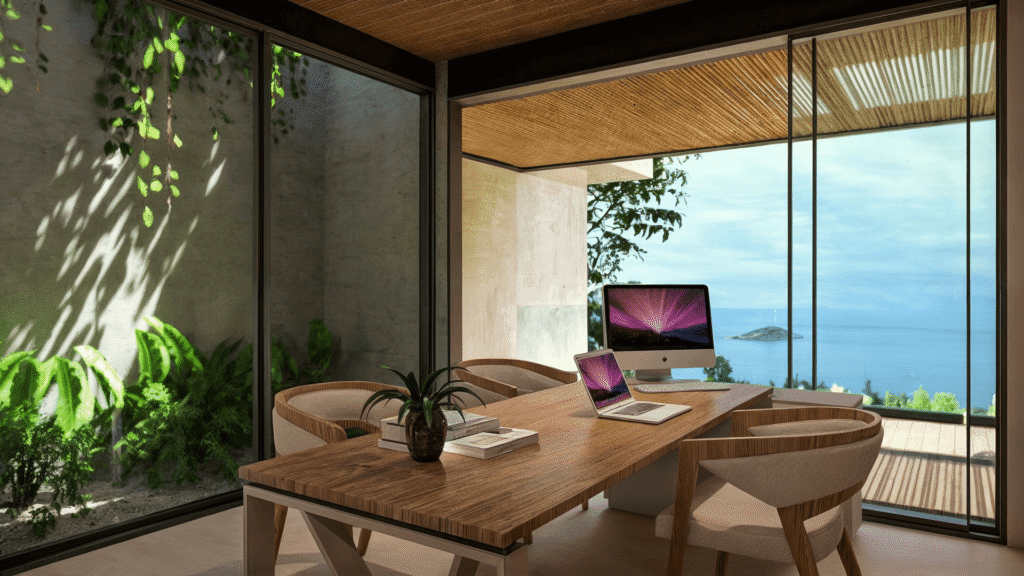
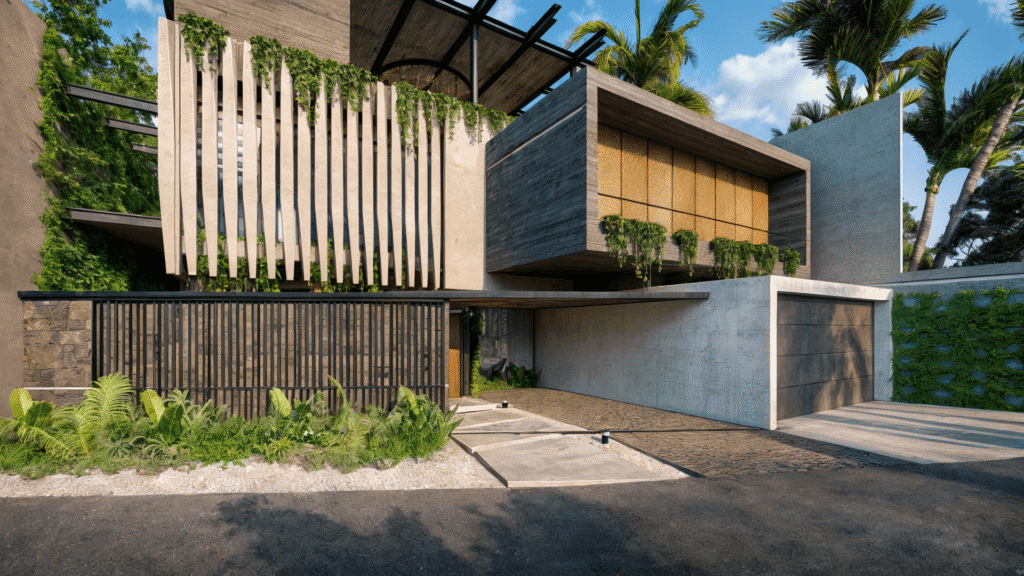
Within this concept, the wall can be solid where it must provide protection, it can open where it must capture the breeze, it can become a screen where it must filter the sun, it can be glass where it must frame the horizon, it can merge with vegetation so that nature is not a backdrop, but a living presence.
The four layers of the wall, a simple guide
In Breeze House, the wall is understood as a combination of layers working together.
The first layer is solar control, intelligent shade, overhangs, screens, rhythms that reduce thermal load and protect the building’s skin.
The second layer is view and transparency, openings placed with intention, not to open just for the sake of opening, but to compose scenes, to direct the gaze, to create depth.
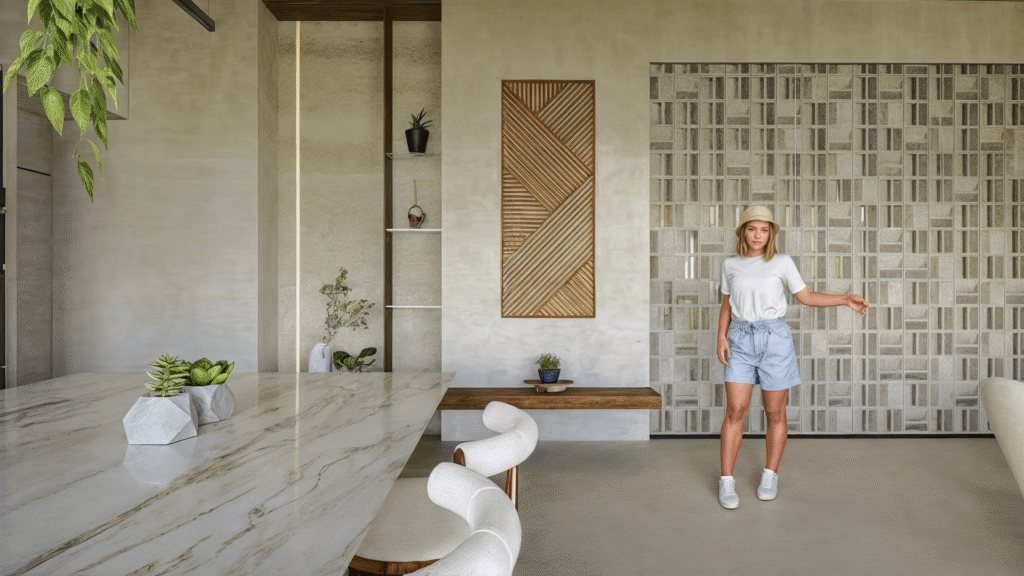
The third layer is material and texture, where the mineral and the warm balance each other, where the house feels solid, real, and enduring.
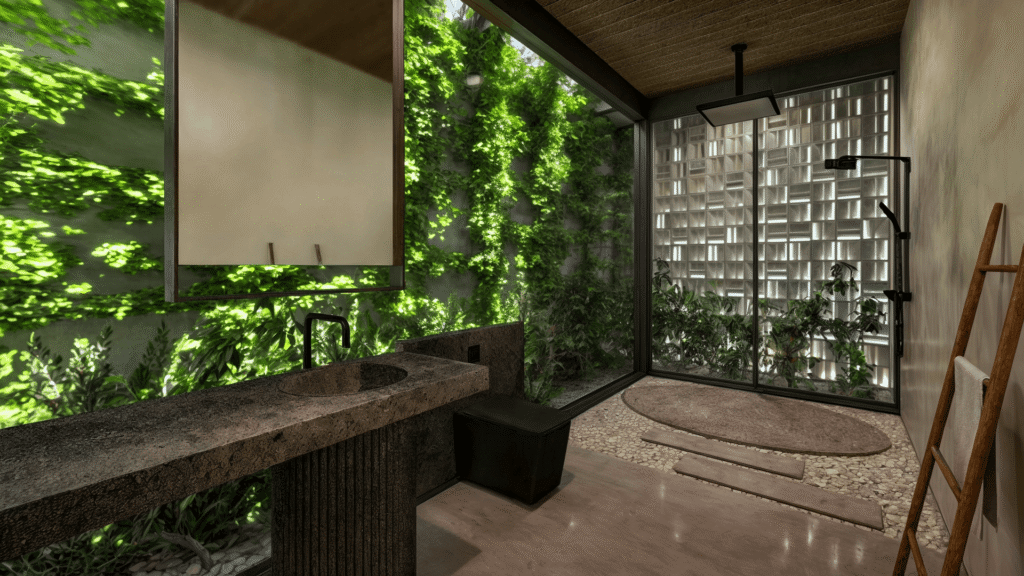
The fourth layer is the living layer, vegetation, controlled humidity, organic shade, a natural filter that cools, softens, and connects.
When these layers come together, what matters happens, the wall no longer cuts nature, it interprets it.
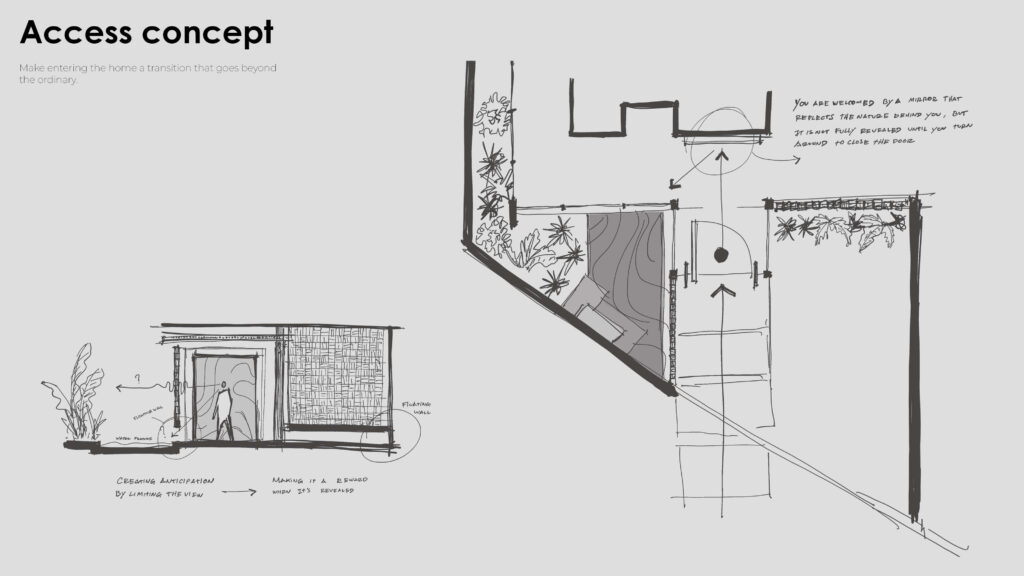
3) The arrival, entering as a transition, not as a simple door
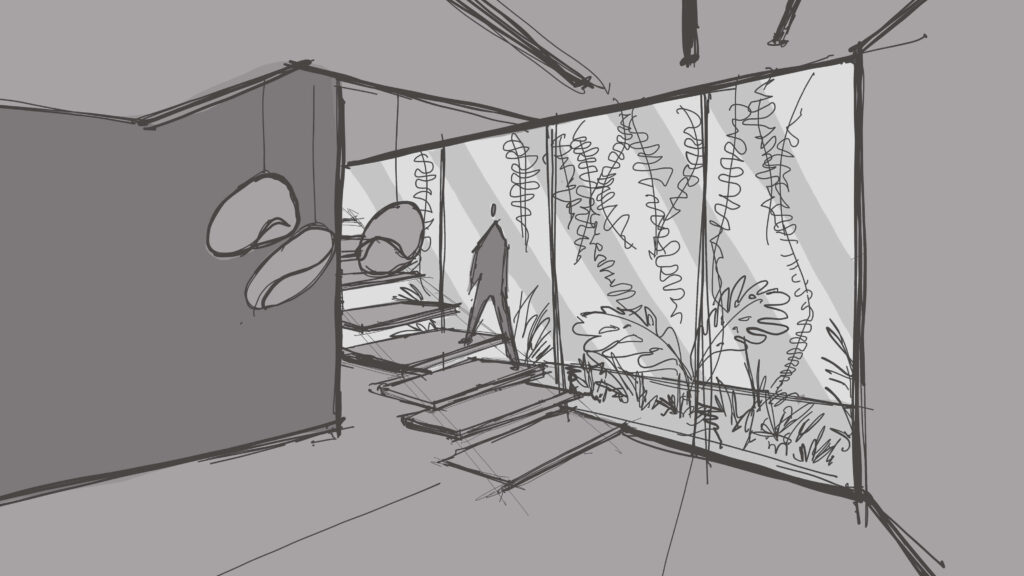
A home with intention is not simply “entered”, it is crossed. Arrival is an experience of change, a small ceremony that separates outside from inside, noise from calm, rush from a slower rhythm. In Breeze House, the entry is designed as a transition that goes beyond the ordinary. This means arrival is not only logistical, it is emotional. Architecture decides when to compress space, when to darken it, when to let the body feel the coolness, when to let the ear hear water or wind, when to reveal the first gesture of the landscape. The entry is also the first contact with the wall concept, this is where the wall begins to show its layers, its depth, its way of filtering light. Arrival becomes a promise, and the house starts to speak before it fully opens.
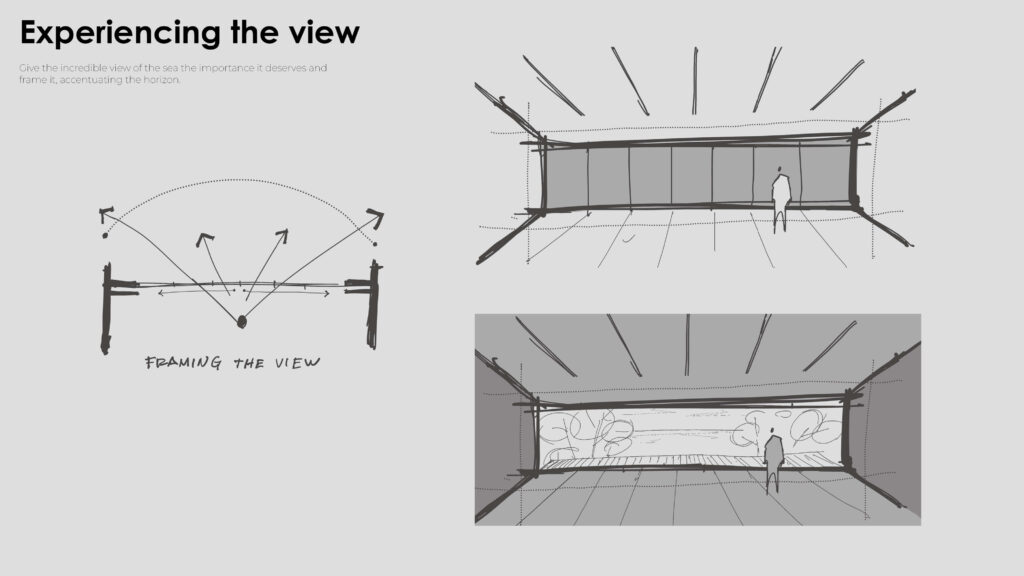
4) The view, an architecture of the gaze, framing the horizon as the main act
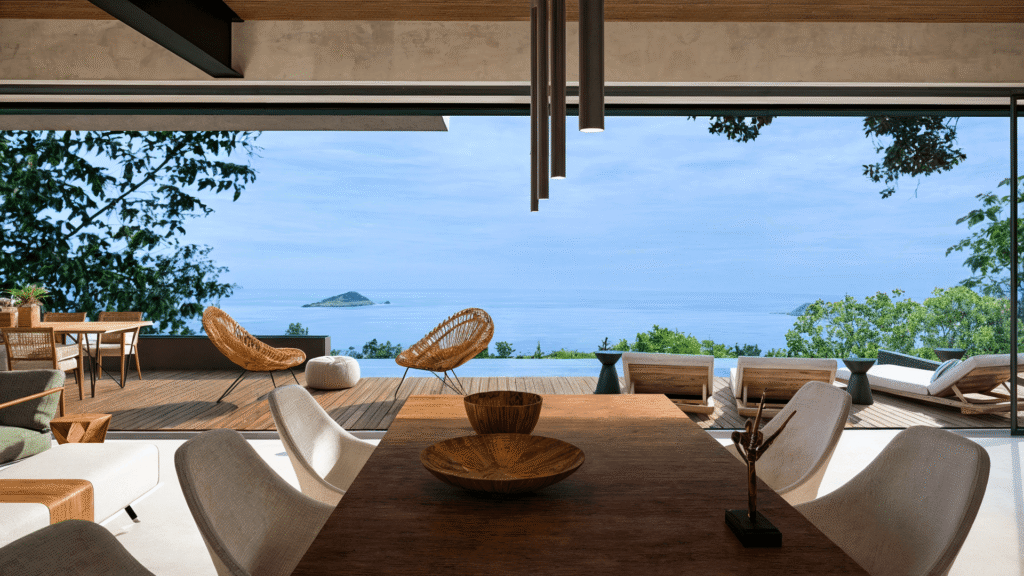
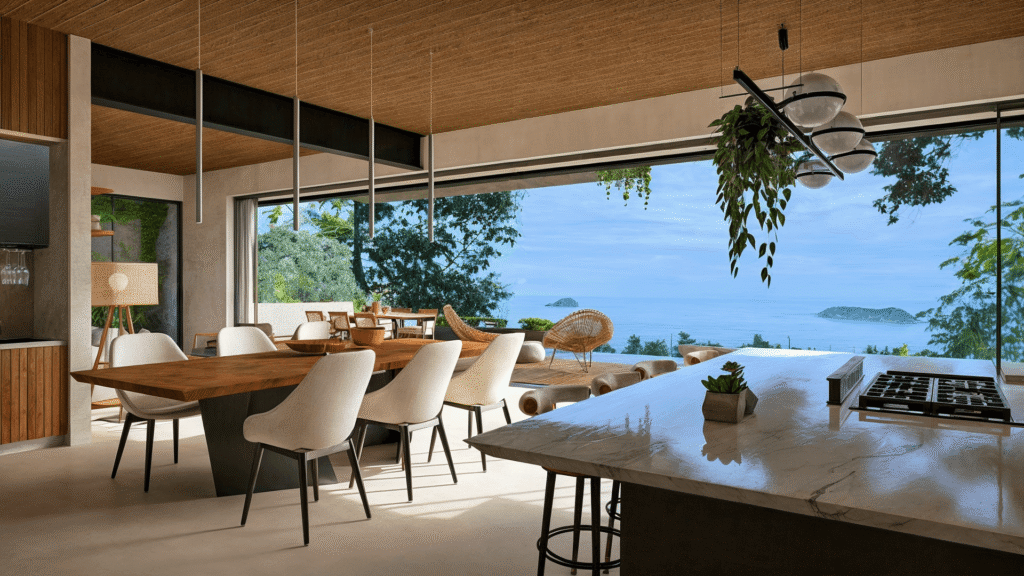
In Manuel Antonio, the view is not an extra luxury, it is part of the essence of the place. But a view is not “owned” simply by being there, a view is composed. And composing a view is an architectural act, it is about proportion, eye level, shade, framing, contrast.
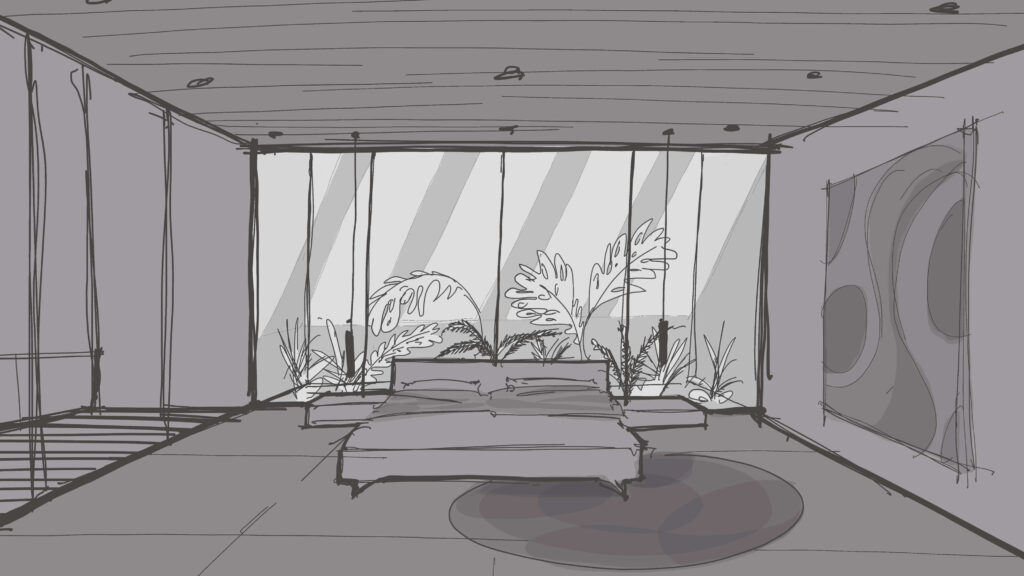
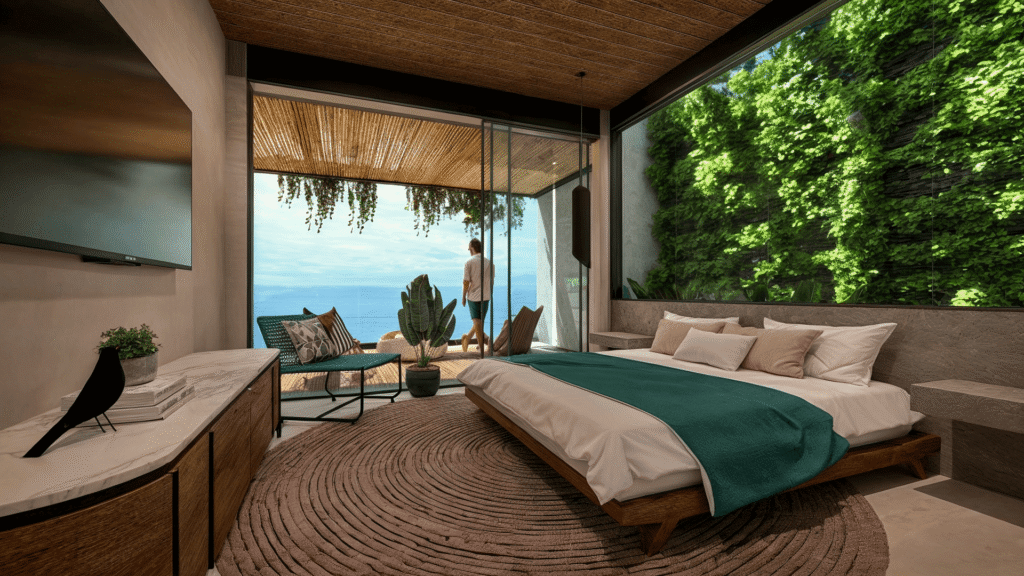
In Breeze House, the ocean view receives the importance it deserves, it is framed and the horizon is emphasized. The frame is not just any window, it is a decision of scale and silence. A strong framing makes the exterior shine more, because the interior lowers its volume, creates shade, creates depth, and then the landscape becomes a crisp scene, almost cinematic.
5) Special scenes, when the concept becomes daily life
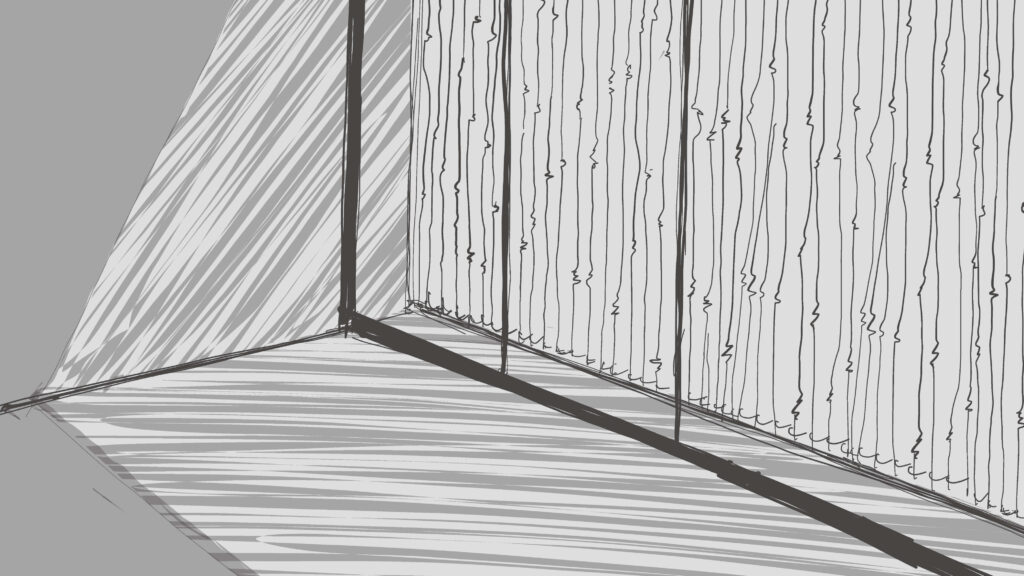
In Breeze House, the concept is understood through small situations, a corridor that becomes a filtered garden, a screen that allows seeing without exposure, an interior that breathes because light enters softened, a shadow that becomes texture over a mineral wall, an opening that is not a “hole”, but a directed gaze. These scenes are what make the project habitable and profound, because the house feels different depending on the time of day. In the morning, the light is soft and golden. In the afternoon, shade protects and cools. At night, the house becomes refuge, with warm, controlled, intimate lighting.
6) Materiality, the mineral to endure, the warm to inhabit
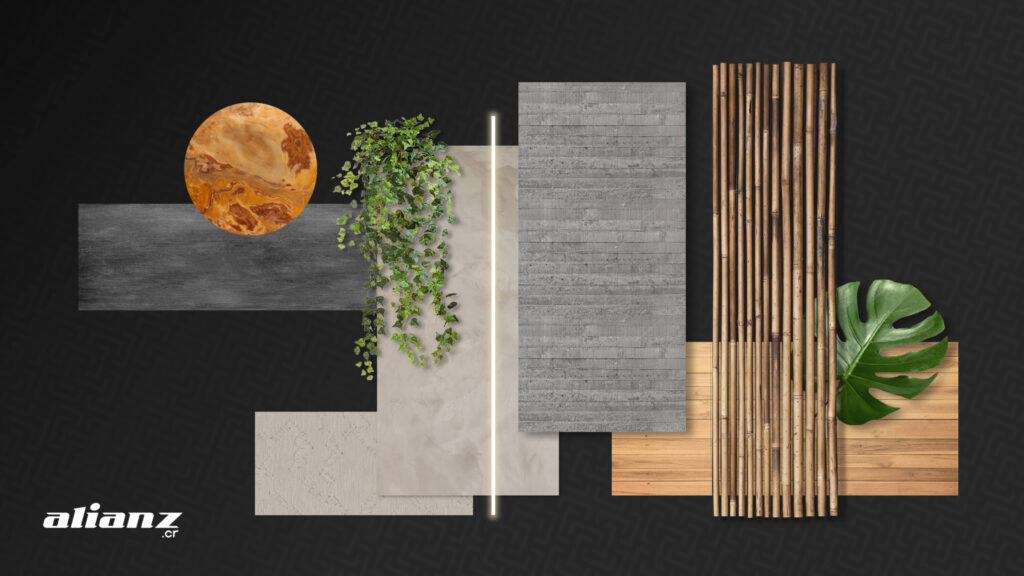
Materiality in the tropics is not only an aesthetic topic, it is a decision about lifespan. Breeze House proposes a palette that balances the mineral and the warm, stone, concrete, light surfaces, slatted wood, hanging vegetation, and precise accents that bring character. The mineral supports, resists, and ages with dignity. The warm embraces, humanizes, and softens the hardness of the durable. Vegetation is not decoration, it is a living layer, it is microclimate, organic shade, air. When this palette integrates with the layered wall concept, the result is not a “decorated” home, it is a coherent home, where every material plays a role, thermal, visual, tactile, and also emotional.
Conclusion, a home that breathes with the tropics
In Breeze House, architecture does not seek to impress, it seeks to sustain. To sustain the breeze, sustain the shade, sustain the view, sustain daily life with serenity. The wall becomes an instrument, the entry becomes a transition, the view becomes a destination, and materiality becomes a lasting atmosphere.