

Building in Manuel Antonio: Rain, Slope, and Ocean Views
Building in Manuel Antonio is different from building almost anywhere else in Costa Rica. The region is spectacular, dense jungle, dramatic hillsides, and the Pacific horizon, but it is also technically demanding. If you want a home that feels calm, performs well, and ages with dignity, you must design around three forces that shape every decision: heavy rain, steep terrain, and ocean views.
In Manuel Antonio, architecture is not only about form. It is about water management, stability, shading, ventilation, maintenance, and the daily experience of moving through a landscape that is alive and constantly changing.
Rain in Manuel Antonio: Design for Water First
Rain here is not a seasonal detail, it is a permanent design condition. Storms can be intense, wind driven, and long. High humidity can remain for months. This affects everything, waterproofing, material durability, indoor comfort, and maintenance.
A common mistake is thinking that “not leaking” is the finish line. In tropical environments, the real goal is shedding water quickly and drying fast. When a building dries fast, it reduces mold, stains, algae growth, and the slow deterioration of joints and finishes.
Roof geometry and drainage that actually works
For building in Manuel Antonio, roof design should be simple, reliable, and deliberate. Correct slopes, strong edge detailing, and clear water paths are essential. Gutters and downspouts must be sized generously and placed where water can be released safely, without erosion near foundations.
The most important details are often invisible: drip edges, overlaps, flashing continuity, and clean junctions between roofs, walls, terraces, and window systems. In the tropics, durability is built in the transitions.
Overhangs are not style, they are protection
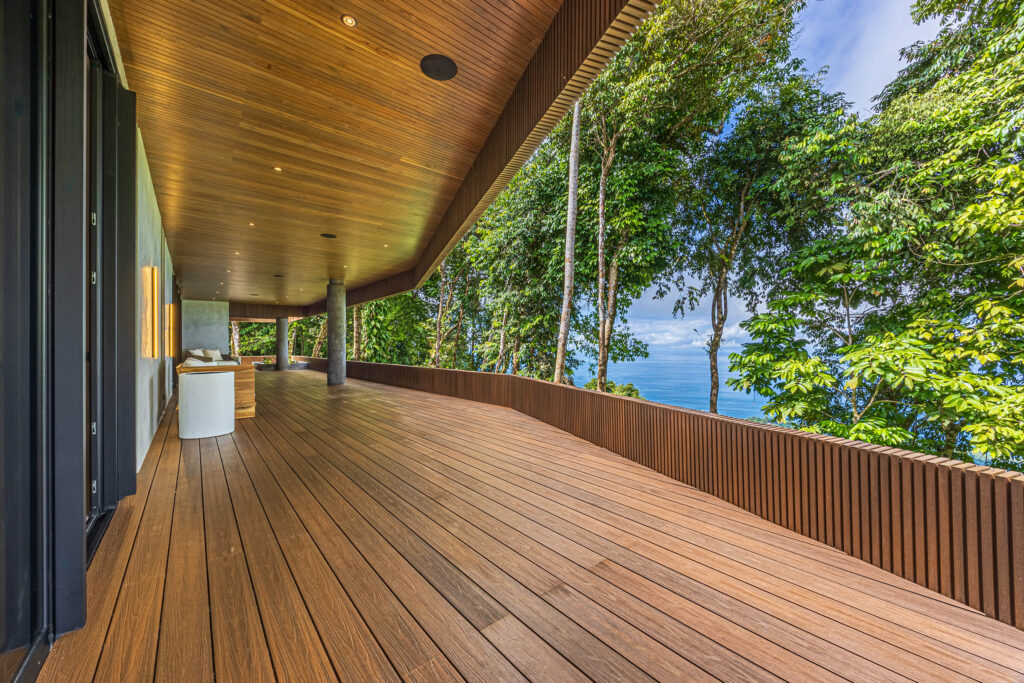
Deep overhangs protect the building skin from direct rain and sun. They also protect doors and windows, reduce glare, and create usable exterior circulation even during downpours. A well shaded terrace becomes a true living room in Manuel Antonio, not just a photo moment.
Steep Lots and Slope: Let the Land Guide the Design
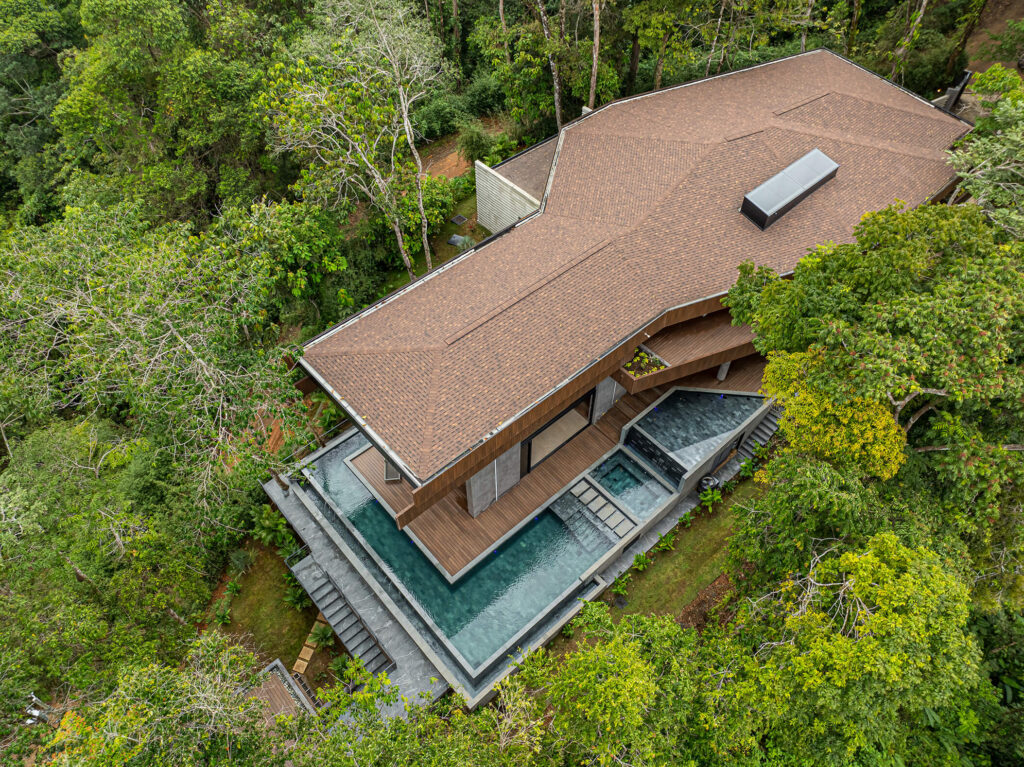
Many properties in Manuel Antonio sit on hillsides. Slope can be a gift, terraces, split levels, dramatic views, and a sense of floating over the canopy. But slope is also where budgets can collapse if the project fights the land.
The best approach is to read the terrain early and design with it. A home should step with the hillside instead of forcing huge excavation. When the architecture aligns with the natural topography, earthworks reduce, retaining needs decrease, and the project becomes more stable and more elegant.
Earthworks, retaining, and stability
Steep lots often require retaining strategy, but not every hillside home needs massive retaining walls. Smart design can use the building structure itself, split level planning, and controlled cut and fill to reduce retaining complexity.
Drainage is inseparable from slope. Water moves faster on hillsides, which increases erosion risk. A clear runoff strategy, surface drains, subsurface drains, and water release points, is critical. The goal is to move water away without undermining soils or saturating key areas.
Construction logistics on hillside sites
Building in Manuel Antonio also means planning for access. How do trucks enter the site? Where can materials be staged? How does concrete reach key zones? What happens during heavy rain when roads get slippery and visibility drops?
These questions affect schedule and cost. A project can be perfectly designed on paper and still suffer if logistics were not addressed early. Smart planning avoids delays, rework, and unnecessary damage during construction.
Ocean Views: You Compose Them, You Don’t Just “Have” Them
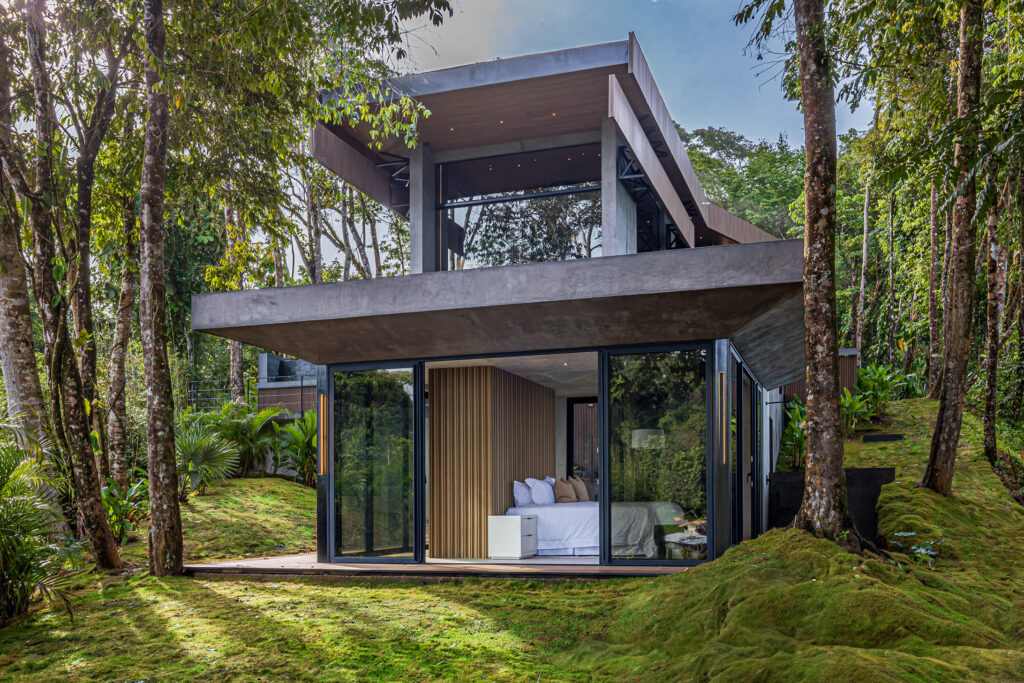
Ocean views are one of the main reasons people buy in Manuel Antonio, but a view is not automatic. A view is composed. It is proportion, eye level, depth, contrast, and shade.
The most common mistake is over opening the façade. Large glass without protection may capture the view, but it can also create overheating, glare, and high dependence on air conditioning. The goal is a home that feels open and connected, while still cool and protected.
Framing the horizon with shade and depth
A strong tropical design rule is simple: the view becomes more powerful when the interior is calm and shaded. When the inside has controlled shadow and depth, the outside reads as a crisp scene, almost cinematic.
Overhangs, screens, and carefully placed openings reduce heat gain and glare while preserving the feeling of openness. Depth matters too. A window is not only a hole, it is a frame, and frames with thickness feel intentional, not accidental.
Orienting openings for comfort
In coastal and hillside contexts, exposure matters. Late afternoon sun can be aggressive. Wind driven rain can enter if openings are unprotected. The best solutions combine orientation strategy, shading geometry, and a layered building skin so that you can enjoy the view without sacrificing comfort.
Materials and Maintenance: Building to Age Well
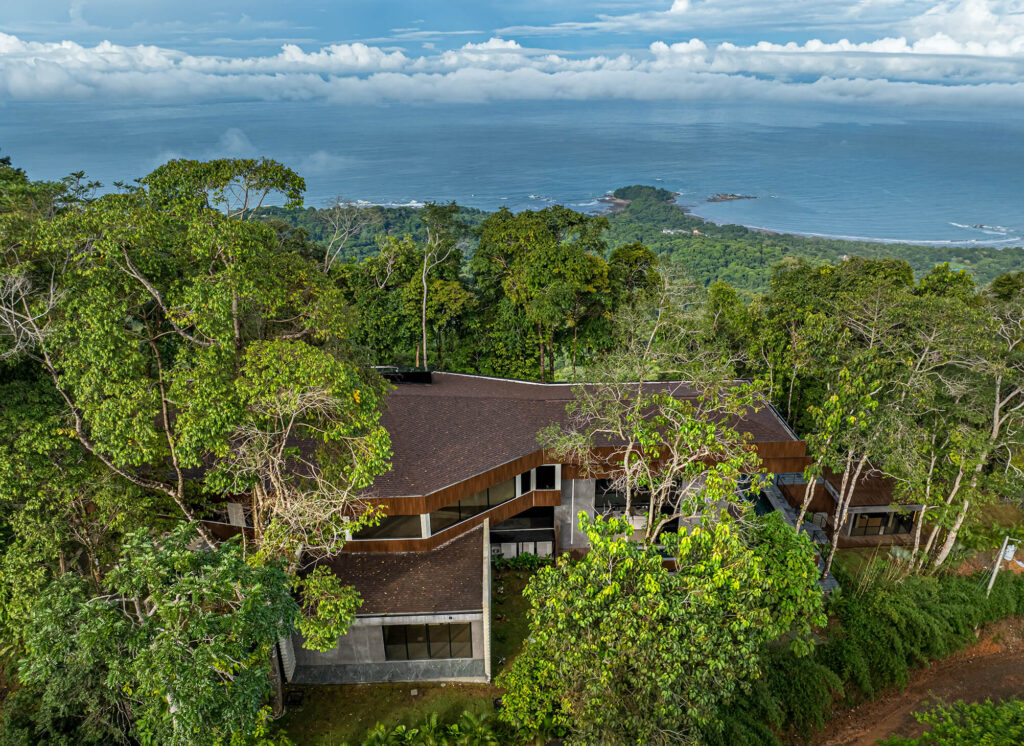
In Manuel Antonio, maintenance should be designed into the architecture. Humidity, sun, vegetation, and salt in the air can degrade systems faster than many owners expect.
Material choices should prioritize durability, washability, and stable performance in moisture. But material alone is not the answer. Detailing is what decides whether materials age with dignity or fail early.
A home that ages well is not one that is “perfect”, it is one designed to be maintained, with access to key components, replaceable elements, and details that prevent water and dirt from collecting in hidden corners.
Conclusion: Building in Manuel Antonio Means Designing for Performance and Atmosphere
Building in Manuel Antonio is about more than a beautiful view. It is about a home that performs in heavy rain, respects steep terrain, and frames the horizon with shade and precision. When water is managed, slope is treated intelligently, and openings are composed for comfort, the home feels effortless. It stays cool, it dries fast, it ages well, and it belongs to the landscape.
At Alianz Arquitectura, we design in Manuel Antonio through a clear method: climate strategy, terrain reading, and view composition, so the project is not only stunning in photos, but precise in real life.

